
St. Petersburg, FL 33710
Skin Cancer Screenings
Peace of mind starts with a careful look.
More Than A Skin Check. Someone Looking Out For You.
Whatever brought you in, we’re glad you’re here.
For many patients, a skin cancer screening comes with some anxiety. Maybe you’ve had significant sun exposure. Maybe skin cancer runs in your family. Maybe you’ve already had one yourself. Or maybe you simply know it’s something you should be doing.
A skin cancer screening is a careful examination of your skin for spots that could represent skin cancer or may need closer evaluation. Skin cancer can occur in people of every skin tone, age, and background — and early detection can make an important difference.
At Wall Dermatology, we take the time to look — and to listen. If there’s a spot you’ve been watching or something that simply doesn’t feel right to you, tell us.
You know your skin. We’re here to help you understand it.
Schedule a full-body skin exam.
Know Your Skin. Notice What’s Different.
A new mole, growth, bump, or persistent spot deserves attention when it appears unusual or continues to change.
Changes in size, shape, color, or other characteristics can warrant evaluation.
Sometimes the important clue is simply that one spot doesn’t look like the others.
A growth that repeatedly itches, hurts, bleeds, crusts, or doesn’t heal should be evaluated.
Your Skin Lives With You Every Day.
A professional skin exam is only part of early detection. Becoming familiar with your own skin helps you recognize something new or changing between appointments.
The American Academy of Dermatology recommends watching for spots that differ from others, change, itch, or bleed — and learning the ABCDE warning signs of melanoma.
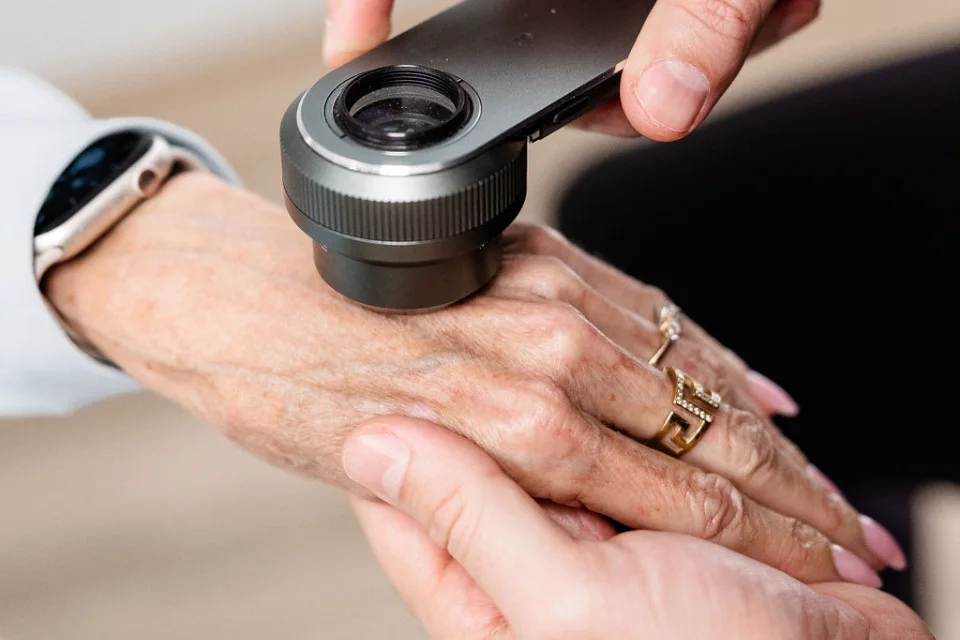
Thorough Doesn’t Have To Feel Clinical.
Talk
We review your concerns, relevant history, prior skin cancers, sun exposure, and any spots you’ve noticed.
Examine
Your provider carefully examines your skin — including areas that are difficult for you to see yourself.
Investigate
If something needs a closer look, we explain what we’re seeing and whether observation, photography, or biopsy is appropriate.
Plan
Before you leave, you’ll understand what we found and what comes next.
You shouldn’t leave a dermatology appointment wondering what just happened.
Asked & Answered.
How often you need a skin check depends on your individual risk. For many patients, we recommend establishing a baseline skin exam and then determining an appropriate screening schedule based on your skin type, sun exposure, moles, and family history.
Yes. Skin cancer can affect people of all skin tones.
We’ll explain what we see and what we recommend. If a biopsy is appropriate, many biopsies can be performed right in our office.
There isn’t one schedule that’s right for everyone. Your provider can recommend follow-up based on your personal and family history, previous skin cancers, number and type of moles, sun exposure, and other factors.
Peace Of Mind Starts With A Skin Check.
Take care of the skin you’re in — for today and the years ahead.